Acne scars can affect more than just your skin… they can impact your confidence and how you feel about your appearance.
If you’ve been struggling with uneven texture, stubborn acne marks, or dull-looking skin, our chemical peel treatment in Tampa at Health & Medspa can help… Chemical peeling is an affordable, simple, and effective solution to help restore a smoother, clearer complexion.
Chemical peels are a popular dermatological treatment. Designed to gently exfoliate the skin. It encourages healthy skin renewal.
With decades of clinical use and millions of treatments performed each year, chemical peels continue to be a reliable and affordable option for clients seeking noticeable yet non-surgical skin improvement.
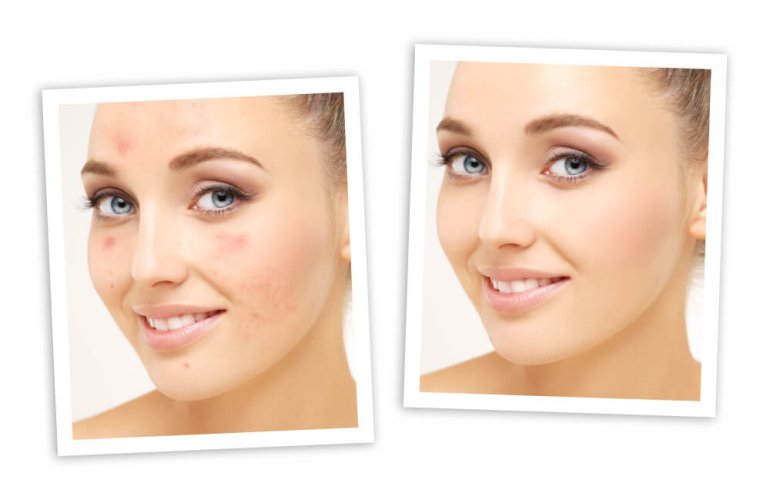
When performed by experienced professionals, chemical peel before and after results can amaze you… The treatment can help reveal smoother, more refreshed skin and give you the confidence that comes with a healthier-looking complexion.
What is a Chemical Peel?

A chemical peel is an aesthetic treatment in which various chemicals are applied to your face to remove damaged layers of skin.
To improve the appearance and texture of the skin, in this procedure, a trained professional applies a special chemical solution to your skin. It then gently exfoliates and removes the damaged outer layer.
Your old skin peels away. New and healthier skin grows in its place. This process helps reduce acne scars and diminishes fine lines. It can even out your dull-looking skin and uneven skin tone. Chemical peel scar treatments can also correct your dark spots.
Types of Chemical Peels
The American Society for Dermatologic Surgery classified chemicals peel sinto three main types based on how deeply they penetrate the skin.
1. Superficial (Light) Peels
Superficial peels, as the name suggests, target your outermost layer of the skin, known as the epidermis.
They usually contain mild acids such as AHAs, lactic acid, or salicylic acid.
This chemical peeling is commonly used to treat mild acne, minor acne scars, uneven skin tone, and dull skin. They require little to no downtime and are often performed in a series of treatments.
2. Medium Peels
Medium-depth peels penetrate deeper into the skin. It can reach the upper dermal layer.
They commonly use agents like glycolic acid and trichloroacetic acid (TCA).
These peels are effective for treating moderate acne scars. They can target pigmentation issues and help reduce fine lines. Some redness and peeling may occur, and recovery usually takes a few days.
3. Deep Peels
Deep chemical peels reach the deeper layers of the dermis and are used for more severe skin concerns such as deep acne scars, significant sun damage, and deeper wrinkles.
These peels use stronger chemical solutions such as Trichloroacetic acid or phenol and typically require a longer recovery period. Deep chemical peel can produce more dramatic and long-lasting results.
How Does a Chemical Peel Work For Acne Scars?

A facial chemical peel works by applying a controlled chemical solution to your face. Skin care peels commonly contain agents such as alpha hydroxy acids (AHAs), beta hydroxy acids (BHAs), trichloroacetic acid (TCA), or glycolic acid. When applied by a trained professional, these chemical face peels cause controlled exfoliation and keratolysis. It removes the damaged outer layers of the epidermis.
This controlled injury, stimulated by chemical peeling, promotes the skin’s natural cellular regeneration. It also involves collagen remodeling processes.
As the exfoliated skin peels away, new epidermal cells replace the old ones. Your skin will get improved skin texture and tone.
At the same time, the chemical peel process increases collagen and elastin production within the dermis. Thus, helping reduce the depth and visibility of acne scars.
Over time and with repeated treatments, chemical peels for acne scares shows results by promoting epidermal renewal, dermal remodeling, and improved skin uniformity. Resulting in smoother skin and a noticeable reduction in acne-related scarring.
Types Of Acne Scars That Respond To Chemical Peels

Chemical peels are effective for certain types of acne scars, specifically the ones that have texture or pigmentation. They are not suitable for all types of acne scars and can react worse towards them. The following are the types of acne scars that are chemical peel-friendly.
Post-Inflammatory Hyperpigmentation (PIH)
Post-Inflammatory Hyperpigmentation is a dark mark that is flat and usually appears on the skin after an injury, cut, or rash, mostly after acne. In the PIH chemical peel process, you can get rid of those stubborn marks with expert guidance.
Superficial Atrophic Scars
If you have superficial atrophic scars or deep scars. Or you have caused them by picking pimples and chickenpox. No worries. Chemical peels for deep acne scars can give you promising results… They heal these scars, and there’s no trace of them left behind.
Macular Erythematous Scars
Macular Erythematous scars are pink or red marks usually left on the skin after acne or skin irritation. They are often called scars, but not truly scars. Skin care peels can treat them, making your skin shine flawlessly.
Benefits Of Chemical Peels For Acne Scars

Chemical peels offer a wide range of advantages for improving acne scars and overall skin quality:
→ Reduces Acne Scars. Chemical peeling can exfoliate the damaged outer layers of skin and stimulate new skin cell growth. Thus, help minimize the appearance of shallow and moderate acne scars.
→ Improves Skin Texture. Skin care peels smooth rough, uneven, or bumpy skin. Leaving it softer and more refined.
→ Evens Skin Tone. Chemical face peels help fade your hyperpigmentation. It treats post-inflammatory dark spots and redness you get after acne, creating a more uniform complexion.
→ Stimulates Collagen and Elastin Production. Chemical peels trigger your skin’s natural healing processes. It works by increasing collagen and elastin levels. These strengthen the skin and reduce scar depth over time.
→ Prevents Future Breakouts. Yes. Certain chemicla peel for acne, especially those with salicylic acid, help unclog pores, remove excess sebum, and reduce the risk of new acne formation.
→ Minimally Invasive and Safe. Chemical peels are non-surgical treatments. With controlled application. Making them safer and less invasive compared to other scar removal procedures.
→ Enhances Absorption of Skincare Products. By removing the outer layer of dead skin, chemical peeling allows your medical-grade skincare, serums, and topical treatments to penetrate more effectively. Making them more effective!!
→ Chemical face peels do exfoliation and cellular renewal. Resulting in fresher, brighter, and more hydrated skin, giving you a healthy glow.
→ Customizable for All Skin Types. Chemical peels can be adjusted in strength and formulation according to your skin type, concerns, and sensitivity.
→ Long-Term Benefits. With repeated sessions, chemical peels scar treatment improves your skin resilience, texture, and overall appearance over the long term.
Who Is An Ideal Candidate For Chemical Peels For Acne Scars?

Chemical peels for scar treatment can benefit many people. But the ideal candidates are those whose skin and acne scar concerns align with the treatment’s capabilities.
The treatment is for:
- People with mild to moderate acne scars.
- Those who want to improve their skin’s texture and appearance.
- Those seeking a non-surgical and minimally invasive treatment. It is to refresh and smooth their skin.
- Clients with uneven skin tone, dark spots, or post-acne pigmentation.
- People with generally healthy skin. That is without active infections, open wounds, or severe skin conditions.
- Those who are committed to following post-treatment care for optimal results.
- Those who are not expecting instant results. But are ready for consistent, noticeable skin renewal over multiple sessions.
Who Should Avoid Chemical Peels?
Chemical peel services are not for everyone. Due to different skin types and conditions, every skin may respond differently to chemical peels for acne. Chemical peels may be unsuitable for you:
- If you have a problem of skin infections or have wounds on your skin, then chemical peels may cause scars and respond badly to them. It can also spread infection.
- If you have recently used some skin medications like Isotretinoin (oral retinoids) or some acne creams to treat acne, then chemical peels are not for you and can result worstly towards your skin.
- For pregnant and breastfeeding mothers, some peels are not recommended, like deep peels or TCA.
- If you have sensitive or fragile skin due to steroids or again,g then chemical peels for deep acne may respond badly to them.
- If you have had facial treatments recently, like Botox, Laser, or Fillers, then soon after these treatments skin may be too sensitive for Chemical peels, which may result badly and can cause other skin problems or skin irritation.
Chemical Peels vs Other Acne Scar Treatments
Chemical peels are one of several options for acne scars.
Here’s how they compare:
- Microneedling: Microneedling stimulates collagen with tiny needles. It is better for deep scars, but requires multiple sessions.
- Laser Treatments: Highly effective for severe scars and pigmentation. But laser treatment can be more expensive and involve a longer recovery.
- Dermabrasion: Physical exfoliation for deeper scars. Microdermabrasion for acne is effective, but more invasive than chemical peels.
- Topical Treatments: Creams or serums improve mild discoloration, but results are slower and less dramatic.
→ Advantage of chemical peels: Non-surgical, customizable, minimal downtime, and improves both texture and tone.
Here is a detailed comparison of chemical peels vs other acne scar treatments:
| Feature | Chemical Peels | Microneedling | Laser Treatments | Dermabrasion |
| How It Works | Uses chemical solutions to exfoliate damaged skin and stimulate new growth | Tiny needles create controlled micro-injuries to stimulate collagen | Focused laser energy resurfaces skin or targets pigmentation | Mechanical exfoliation with a rotating instrument |
| Ideal For | Mild to moderate acne scars, uneven tone, pigmentation, and fine lines | Deep acne scars, large pores, fine lines | Severe acne scars, pigmentation, and deep wrinkles | Deep scars, severe textural irregularities |
| Number of Sessions | 3-6 sessions (depends on peel depth) | 3-6 sessions | 1–3 sessions (depends on type/severity) | Usually 1-2 sessions |
| Recovery Time | Minimal to moderate; redness and peeling for a few days | Mild redness and swelling; 1–3 days | Moderate to long; redness/swelling up to 1–2 weeks | Moderate to long; 1–2 weeks healing |
| Pros | Non-surgical, customizable strength, improves texture and tone, minimal downtime | Stimulates natural collagen, improves texture, and scar depth | Highly effective, precise, targets deep scars/pigmentation | Effective for deep scars, immediate smoothing effect |
| Cons | Temporary redness, mild irritation; not ideal for deep scars | Multiple sessions, minor discomfort, possible bruising | Expensive, longer recovery, possible sensitivity/pigmentation changes | Invasive, longer downtime, higher risk of infection/scarring |
What To Expect During Chemical Peels?
At Health & Medspa, your entire chemical peel treatment for acne scars is performed under the supervision of experienced dermatology and skincare professionals.
From the initial consultation to post-treatment care, every step is carefully planned. It is to ensure maximum safety and effectiveness.
Our team uses a state-of-the-art medspa facility in Florida. Equipped with advanced technology and high-quality, medical-grade chemical solutions. We prioritize a controlled and comfortable treatment environment, ensuring that each peel is suitable for your skin type, scar severity, and personal goals.
→ Before the Treatment

- Your skin will be cleansed. Any makeup, oils, or impurities are removed.
- A consultation determines the right peel type for your skin and scar severity.
- Pre-treatment instructions may include avoiding sun exposure or stopping certain skincare products.
→ During the Treatment

- The chemical solution is applied evenly over the target area.
- You may feel a mild tingling or warming sensation.
- The solution works to exfoliate damaged skin; the process usually takes 20–30 minutes, depending on peel depth.
→ After the Treatment
- Skin may be red, sensitive, or slightly swollen for a few hours to a few days.
- Gentle skincare and sun protection are essential.
- Peeling may occur over several days as new, healthier skin emerges.
Chemical Peel Results: What You’ll Notice?

After undergoing a chemical peel treatment for acne scars, you can expect several visible improvements in your skin:
→ Smoother, Softer Skin Texture. The exfoliation chemical peel process removes your dead and damaged skin cells. Revealing a fresh, refined surface. It will feel noticeably softer to the touch.
→ Reduced Visibility of Acne Scars. Mild to moderate acne scars become less prominent. As the peel stimulates skin renewal. And also, the collagen production gradually evens out the skin’s surface.
→ Faded Pigmentation and More Even Skin Tone. Dark spots, post-acne marks, and uneven pigmentation fade over time with a chemical skin peel. Resulting in a more uniform and radiant complexion.
→ Brighter, Refreshed, and Healthier-Looking Skin. Promoting cellular regeneration. Chemical peels give your skin a natural glow and a rejuvenated appearance.
→ Enhanced Appearance. Your skin texture, tone, and clarity improve over multiple sessions. Many of our clients report feeling more confident and satisfied with their overall look.
Potential Risks and Side Effects of Chemical Peels
While generally safe, some side effects may occur:
- Temporary redness, swelling, or mild irritation.
- Peeling, flaking, or dryness during the healing period.
- Rarely, hyperpigmentation or hypopigmentation (darkening or lightening of the skin).
- Infection or scarring if post-care instructions are not followed.
Recovery and Aftercare Tips
Healing time after chemical peels may vary. It is according to skin type and the depth of the peel. After chemical peels, the skin needs to be avoided from getting into contact with direct sunlight. It should be protected from heat and sweat.
Peeling or picking the skin is strictly prohibited. Proper moisturization of the skin is required for speedy recovery.
Skin should be cleansed frequently with a mild cleanser or as suggested by your dermatologist. You should avoid touching and rubbing your skin. Unless advised, make-up should also be avoided.
If the above-mentioned tips are taken care of, then it will result in better and speedier recovery and will protect your skin from any damage.
Professional Chemical Peel Treatment in Tampa at Health & MedSpa

At Health & MedSpa in Tampa, our trained dermatology professionals customize chemical peel treatments for your skin type and acne scar concerns.
With a focus on safety and effectiveness, we ensure each session is comfortable and designed to deliver visible results.
Why Choose Health & MedSpa for Chemical Peel Treatments?
- Experienced Professionals. Certified dermatologists and skincare specialists.
- Customized Treatments. Peels tailored to your skin type and scar severity
- State-of-the-Art Facility. Modern equipment and safe procedures.
- Patient-Focused Care. Guidance before, during, and after treatment for optimal results.
- Proven Results. Hundreds of satisfied patients with smoother, clearer, and healthier-looking skin.
Ready to Transform Your Skin?
Don’t let acne scars hold you back…
Schedule your professional chemical peel treatment in Tampa at Health & Medspa today.
Our expert team will customize a safe and effective plan to help you achieve smoother, clearer, and healthier-looking skin.
FAQs
Is a chemical peel painful?
Most peels are comfortable, but medium and deep peels may cause temporary discomfort. Your skin care specialist adjusts the strength or uses numbing agents for your comfort.
How many chemical peel sessions are needed for acne scars?
Mild acne scars usually need 3 to 4 sessions spaced 2 to 4 weeks apart. While moderate scars may require 4 to 6 sessions spaced 4 to 6 weeks apart.
Can you put makeup on after a chemical peel?
Yes, depending on the peel. Superficial peels after 24 hours, medium peels after 5–7 days, and deep chemical peels after 10–14 days, using gentle make-up.
How long does a chemical peel take to heal?
Healing depends on peel depth: superficial, 3 to 7 days, medium, 7 to 14 days, and deep peels, 2 to 3 weeks or longer.