Cheek fillers are a non-surgical cosmetic treatment. Used to enhance the volume, shape, and contour of your cheeks. Cheek enhancement fillers involve injecting dermal filler substances. Beneath your skin to restore lost volume or create a more lifted, youthful appearance.
Cheek fillers are not about making your face puffier, but about rebuilding the facial structure. The aesthetic practice of today has turned away from the corrections on the surface to structural rejuvenation.
This is not all… more than 3 million dermal filler procedures are carried out each year in the U.S. alone, which is a sign of an increasing trend of very mild, natural-like facial changes.
Research in the aesthetic medicine literature emphasizes that one of the first and most noticeable aging changes is a loss of volume in the middle of the face, which may manifest itself in the flattening of the cheeks and the deepening of nasolabial folds.
This is the reason why cheekbone fillers are a common treatment: they do not cover the symptom but the cause.
What are Face Cheek Fillers?

Cheek dermal fillers are injectable dermal filler materials (mostly hyaluronic acid, HA) that are used to replace volume, enhance shape, and enhance symmetry in the face.
The face cheek fillers used to fill up cheeks are usually deposited in deeper tissues, sometimes even near the bone. It is unlike the superficial treatment methods used in other treatments that address wrinkles.
The cheek fillers are currently utilized in modern practice to restore the natural structure of the cheekbones, referred to as the zygomatic arch, in addition to supporting the surrounding structures. This implies that when the cheeks are treated, cheek augmentation tends to enhance other parts of the face like nasolabial folds, early jowling, etc., without necessarily injecting them.
Types of Cheek Fillers
Cheek enhancement fillers are of different types which are chosen according to the anatomy of the patient, their age, and the desired outcome.
→ Hyaluronic acid-based fillers: These are the most popular, and they are preferred due to their flexibility and reversibility. Hyaluronic fillers draw water and blend well with the skin, thus they can be used both for minor and more pronounced improvements.
→ Calcium hydroxylapatite fillers: They are more viscous and are frequently used when a structural support is needed. C-H fillers also promote collagen synthesis, which enhances the quality of the skin in the long run along with giving an immediate volume.
→ Poly-L-lactic acid fillers: They act in a different way. Instead of being a conventional filler, it provokes the body to make its own collagen over time. This is because it is best suited to patients who need gradual and long-term enhancement, instead of immediate outcomes.
There are more permanent choices like polymethylmethacrylate, but they are applied with a lot of caution because they are long-term and require expertise to be placed safely.
How Do Cheek Fillers Work?

Structurally, the best cheek fillers support columns under the skin and raise and relocate the soft tissue that, over time, has fallen downwards. This gives it a slight lifting effect in the middle of the face.
The hyaluronic acid fillers also attract moisture that increases volume and makes the skin look more hydrated. In the meantime, biostimulatory cheek dermal fillers, including calcium hydroxylapatite and poly-L-lactic acid, stimulate skin fibroblasts to produce collagen. This enhances the volume in the long run, the skin texture, and elasticity.
This multi-layering mechanism is what makes cheek fillers referred to as a corrective and regenerative procedure.
Cheek Filler Procedure: Step-by-Step

A general cheek filler surgery involves the following steps:
Step 1: Anatomical Planning and Consultation
The cheek filler treatment begins with a close facial examination that pays attention to the structural features, such as the zygomatic arch and deep fat compartments.
Your expert aesthetician practitioners analyze the loss patterns of the volume and determine whether a single-plane method or a multilayer method is necessary.
In contemporary practice, a deep pad of fat is first restored to provide structural support before the superficial filling is done. Other clinicians are also guided by ultrasound to avoid complications by mapping vessels.
Step 2: Injection Technique and Layering
The chosen filler is injected either with a needle or cannula after aseptic preparation and local anesthesia. Placement is usually done at the deep supraperiosteal sites (on bone) and then to the superficial fatty layers to refine the contour.
The method of bolus, linear threading or fanning is chosen depending on anatomy and low pressure. In patients with a large loss of midface volume, multilayering is of particular importance.
Step 3: Immediate Assessment and Safety Observation
After injection, the practitioners evaluate the symmetry, projection, and tissue reaction.
Constant observation of blanching, pain, or visual disturbance is required because they can be manifestations of vascular compromise that needs urgent treatment.
Benefits of Getting Cheek Fillers!
Cheek fillers before and after will show you the benefits one can enjoy with cheek enhancement fillers:
→ Structural Midface Rejuvenation
Cheek fillers replace the volume on a deeper level of the anatomy by replacing the underlying structure of the face, as opposed to merely filling lines on the surface.
This gives more natural and proportionate rejuvenation.
→ Lifting the Surrounding Area Indirectly
With support to the midface, cheek fillers provide a mild lifting effect, which may help to eliminate nasolabial folds and early jowling, without necessarily addressing these regions directly.
→ Enhanced Defined Face Structure
Properly placed filler replenishes the peaks of the cheeks and enhances the reflection of light on the face.
This gives a fresher, more defined look but does not provide too much volume.
→ Layered Customization
Different densities can be used to inject cheek fillers at varying depths to enable practitioners to customize the result depending on the face structure.
Such multi-layered treatment will provide harmony and will not make the appearance overloaded.
→ Collagen Stimulation
Some fillers trigger your collagen production, which will enhance skin elasticity and firmness over time.
This provides a regenerative value besides direct volume improvement.
Who Is a Good Candidate of Cheek Fillers?

Cheek fillers are appropriate for persons who:
- Aged, but lost facial volume.
- Want larger cheekbones.
- Favor non-surgical cosmetic interventions.
Nonetheless, fillers can be inappropriate for people with some allergies, infections, or with some underlying diseases. Before going ahead, a consultation is necessary.
What to Expect During Cheek Filler Injection Treatment?
→ Before the Treatment

During the first visit, an expert practitioner does not simply ask you what you want; he examines the motions of the face and the rest of the posture.
This involves assessment of bone structure, position of fat pads, skin thickness, and asymmetries.
Clients are normally cautioned to avoid blood-thinning medications. Moreover, supplements such as vitamin E, fish oil, and ginkgo biloba are also on the no-go list.
At least 24 hours of alcohol should also be avoided before it, since it may dilate blood vessels and predispose to bruising.
Skin condition is also an issue. In cases of active breakouts, infection, or inflammation in the area of treatment, the procedure can be delayed.
The reason is that the delapidated skin predisposes a person to complications, such as infection.
→ During the Treatment

A topical numbing cream is applied after cleansing and allowed to stay for 15-30 minutes. The cheek filler injections are done in layers.
The structural lift is created by deep injections around the bone, and the contour and the transitions are refined by deeper injections. It is this stratification that makes a natural effect and not a stuffed look.
The whole process is usually 20 to 45 minutes. Time varies depending on the complexity of the treatment.
→ After the Treatment

The cheeks will be fuller immediately after the procedure, although this immediate effect is a mixture of filler, swelling, and small inflammation. You need to realize that you have not yet seen the end result.
The peak of swelling typically lasts for 24 – 48 hrs. The face might be firm, a little uneven, or even more prominent than anticipated during this period. It is a normal inflammation process and does not signify bad outcomes.
Most of the swelling is gone at the end of the first week, and the filler will start to naturally become part of the tissue. The actual end outcome is best evaluated at approximately a two-week period, where the swelling that remains is resolved.
Aftercare Tips!
Cheek filler injection aftercare is very important in getting the optimum results. You should not
- Engage in strenuous exercise, involving sweating.
- Increase body temperatures.
- Put pressure on the treated area for at least 24 to 48 hours.
- Don’t sleep on your back or take any massages on the face.
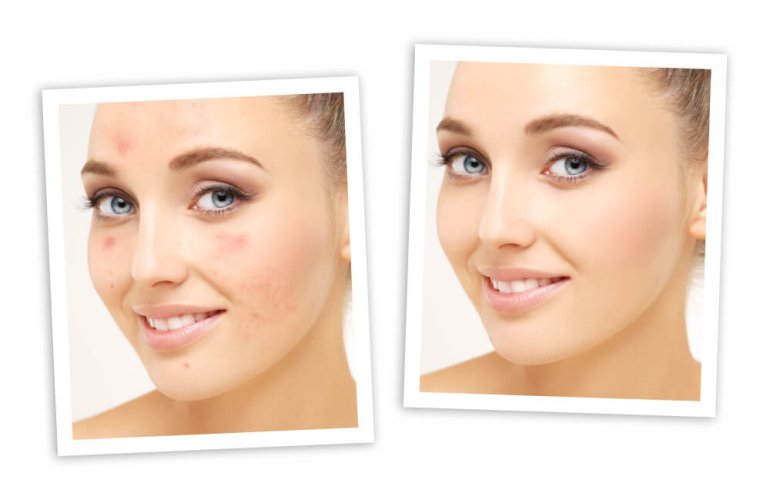
Cheek Filler Before and After Results

The effect of the transformation done with cheek fillers is usually subtle but powerful. The lines become more realistic and elegant as the swelling goes down.
The cheek filler treatment is not aimed at developing volume per se, but rather to regain balance and proportion of the face.
How Long Do Cheek Fillers Last?
The duration of cheek fillers depends on a number of factors that include the type of filler, the depth of injection and the metabolism rate of the patient.
The fillers based on hyaluronic acid usually last between 9 and 18 months, and biostimulatory fillers can last more than two years.
Interestingly, filler, which is deep in the tissue, will wear longer as it is not influenced much by metabolic activities. To maintain the results and keep up with the constant changes in the facial structure, maintenance treatments are normally prescribed.
Risks and Side Effects of Cheek Fillers
Despite being relatively safe, cheek fillers have certain risks.
→ Common Side Effects
- Swelling
- Bruising
- Redness
- Tenderness
These are normally resolved within several days.
→ Rare Side Effects
- Allergic reactions
- Infection
- Filler migration
- Vascular complications (extremely rare but severe)
The risks are considerably minimized by selecting a qualified and experienced injector.
Improve Your Natural Look! Get Cheek Fillers in Tampa with Experts at Health & MedSpa!
It is very normal to get overfilled cheek fillers. But when you get it done from experts, it becomes an art rather than a science…
Why Choose Health & Medspa for Cheek Fillers in Tampa?
In case you are thinking of Tampa cheek fillers providers, we at Health & Medspa have:
- Board-certified aestheticians & practitioners. Experienced with advanced training in aesthetic medicine.
- Extensive facial anatomy expertise. To ensure balanced, natural-looking results.
- Use of premium, Juvederm, FDA-approved fillers, known globally for safety, smooth consistency, and long-lasting results.
- Personalized facial assessment and consultation before every procedure.
- Focus on subtle enhancement, not artificial volume.
- State-of-the-art… A hygienic clinical environment designed for your comfort and safety.
- Strict adherence to medical-grade sterilization and safety protocols.
- Ongoing aftercare support and follow-up to ensure optimal results.
- A reputation built on client trust, satisfaction, and natural transformations.
Get the right proportion in your face and experience true facial rejuvenation with Tampa’s trusted cheek filler experts.
At Health & Medspa, every treatment, including European facials, BOTOX, BHRT, facial treatment, and other beauty needs are tailored… because your face deserves artistry, not guesswork.
FAQs
Are cheek fillers safe?
Yes. They are safe when done by trained practitioners. The complication rates are low, with less than 1%.
How often should you get cheek fillers?
The majority of patients need maintenance after every 12-18 months, but collagen-stimulating fillers can prolong the period.
Do cheek fillers look natural?
Natural outcomes are dependent on the method and the choice of fillers. We offer the best services so your fillers will look natural!
Are cheek fillers painful?
The pain of getting fillers is minimal. Your practitioner will use a numbing cream. Most patients report it to be mild pressure, not pain.