Clear, healthy skin shouldn’t require harsh medications or complicated routines…
If you’re struggling with persistent acne, inflammation, or breakouts that just won’t respond to traditional treatments, blue light therapy may offer a safe and gentle solution.
Blue light therapy has quickly become one of the most trusted non-invasive dermatological treatments for acne. Instead of relying on oral medications or strong topical products that may irritate your skin, this advanced LED treatment works beneath the surface to target acne-causing bacteria and reduce inflammation.
Clinical studies have shown that consistent light-based acne treatments can significantly reduce inflammatory lesions. That also, within just a few weeks.
As a result, blue light phototherapy is now widely used in dermatology clinics and medical spas worldwide as a safe, effective alternative for clearer skin.
In this guide, we’ll walk you through how blue light therapy works, who it’s best for, what to expect during treatment, and whether it may be the right option for your skin.
What Is Blue Light Therapy?

Blue light therapy is a non-invasive skincare therapy that involves exposing the blue LED light of certain wavelengths to destroy skin bacteria. It is generally applied in curing mild to moderate acne, but could also be applied in enhancing some other skin disorders.
The blue light is introduced to the skin in controlled amounts, where it enters the pores and removes bacteria responsible for causing acne, referred to as Cutibacterium acnes (formerly Propionibacterium acnes). When the light is taken in by these bacteria, it provokes a response that kills them without damaging the skin tissue around.
As opposed to other acne treatment methods that utilize harsh chemicals or even oral medication, the blue light skin therapy is based on the inhibition of bacterial activity and inflammation and is pretty mild to the skin.
How Blue Light Therapy Works?

The effect of LED blue light therapy is based on a biological reaction of the light energy and bacteria that cause acne in the skin. The bacteria synthesize natural compounds referred to as porphyrins. Under blue light, the compounds respond and give out oxygen molecules that kill the bacteria.
→ The bacterial population also starts reducing; thus, inflammation and breakouts start to diminish. The blue light skin therapy can eventually result in clear skin and a decrease in recurrent acne lesions.
→ Studies have demonstrated that LED blue light therapy has the capacity to reduce acne lesions when treated regularly over several weeks. This makes it an option to be considered by individuals who prefer alternatives to antibiotics or strong topical drugs.
Skin Conditions Blue Light Therapy Treats!

Even though the need to address acne is the most frequent cause of individuals trialing this therapy, some other skin-related issues are treated with blue light therapy for the skin.
It is often recommended for:
- Lesions of mild to moderate inflammatory acne.
- Zit, which is the overproduction of bacteria in pores.
- Sporadic breakouts and acne.
- The initial symptoms of sun damage.
Photosensitizing agents are used together with certain precancerous lesions of the skin, such as actinic keratosis. Blue light combined with red light therapy is also another treatment in many dermatology clinics.
Although blue light therapy for the face is used to kill bacteria, red light is used to inhibit inflammation and aid the skin healing process.
Blue Light Treatment Process

The blue light therapy face treatment is not complicated, and it is generally conducted in a dermatology clinic or medical spa.
- To begin with, the skin is properly cleansed to clean it of oil, makeup, and impurities. In other instances, a topical solution can be used to enhance the treatment.
- A blue LED device in blue light therapy acne wavelength treatment is placed near the skin after it is ready.
- The blue light therapy for acne normally continues between 15 and 30 minutes.
- At this period, the skin layers receive the light softly. The majority of individuals experience little discomfort, but the process does not necessitate an anesthetic or any form of downtime.
- Once the session is over, the provider can use calming skincare products or sunscreen so that the skin is not exposed to the sun.
Benefits of Blue Light Therapy

The fact that blue light therapy for rosacea and other disorders has a number of benefits over conventional approaches to treating acne is one of the reasons why it is gaining popularity.
→ Non-invasive. It is not invasive; there is no injection or surgery. The recovery time for blue light therapy for eczema and other disorders is also minimal, and people can be back to their normal lives almost immediately.
→ No contribution to antibiotic resistance. Its other advantage is that it does not induce antibiotic resistance, as it acts on the bacteria that cause acne directly.
→ Improved youthful skin. Another blue light therapy benefit is the general skin appearance, which can be improved to decrease redness and inflammation due to breakouts.
What to Expect During Blue Light Treatment?

Here’s what you should expect from the blue light therapy for acne.
→ Before Blue Light Therapy
Consultation is often carried out before starting blue light therapy for wrinkles and other skin concerns. It is to see your level of severity and the type of skin that you have.
Moreover, your practitioner might recommend that you stay off exfoliants, retinoids, or skin-harsh products for a day or two before the session.
Before the application, the skin is cleansed lightly to get rid of oil, dirt, and makeup so that the light may penetrate well. This assists in enhancing the outcomes of treatment and minimizes the chances of irritation.
→ During LED Blue Light Skin Therapy
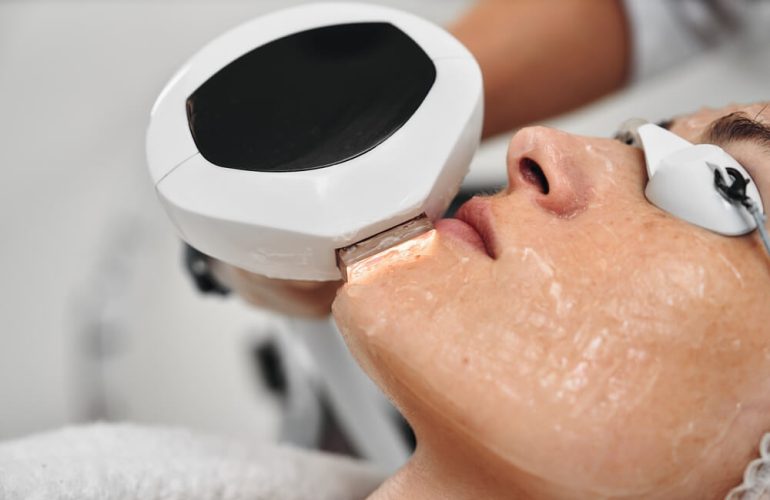
You will be given special eyewear to protect your eyes from the light exposure.
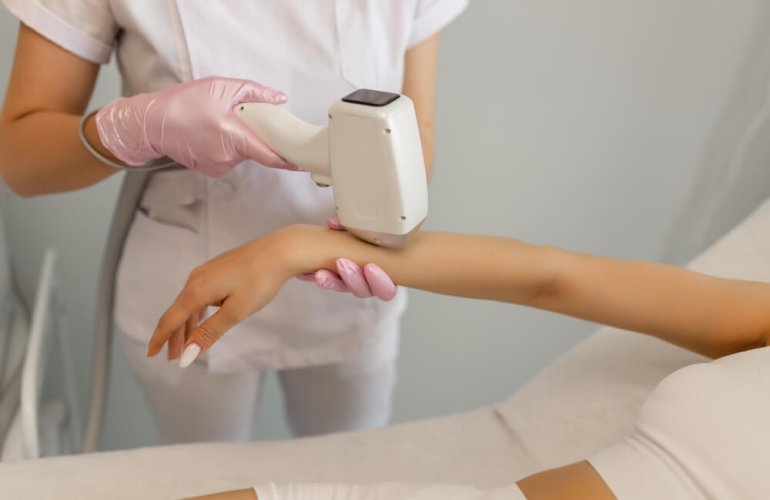
A special LED apparatus is placed near the skin, which emits blue light to the area of treatment.
In most cases, the duration of the sessions is about 15-30 minutes, and most of the patients do not experience much pain.
Moreover, patients, when asked about blue light therapy results, report that the feeling is some sort of warmth or heat.
→ After Blue Light Phototherapy Session
Your skin will be a bit red or a little sensitive for a short time after the session. That is, the effects do not last long, and the majority of people get back to their normal lives after a few hours.
Post-treatment, your practitioner can prescribe sunscreen and mild skincare products.
In order to maintain the results and defend the skin barrier, it is recommended to follow the aftercare directions.
Blue Light Therapy Before and After Results!

The results of the therapy are not instant but gradual. The more consistent you are with the session, the better the results will be.
The outcome of the blue light treatment before and after includes less inflamed and clearer skin, which is usually achieved after 4-8 weeks of regular, twice-a-week sessions.
Before the blue light acne treatment sessions, your skin might have active acne, inflammation, and oiliness; at the end of the treatment, patients have fewer breakouts, fewer under-the-skin bumps, and the skin texture improves. It is a painless, non-invasive, and no-downtime therapy.
You need to keep in mind that most of the effects of blue light face treatment are short-term and that therapy requires continuous sessions in order to maintain. Finally, the best is obtained with the help of one or more sessions regularly.
Who is a Good Candidate for Blue Light Therapy?
Blue light skin treatment is generally suitable for individuals with mild to moderate acne who require a non-harsh treatment. It can also be helpful to people who are unable to withstand some acne drugs. Good candidates are:
- Clients with inflammatory acne.
- People want non-pharmacological treatment.
- Patients with sensitive skin.
- Patients who require combination therapies with skincare therapies.
Nevertheless, a professional assessment is significant as a severe type might need further interventions.
Side Effects of Blue Light Therapy
The blue light laser treatment is usually safe, given its proper application, but there may be mild blue light therapy side effects.
There might be some individuals who have
- Temporary redness,
- Mild dryness,
- Slight skin irritation,
- Sensitivity to light soon after treatment.
The effects are temporary, and they disappear after a few days or two.
Ready for a Bright Clearer Skin? Try LED Light Therapy in Tampa at Health & Medspa!
Red and blue light herapy Tampa, FL is a worthwhile option if you want to find an easy but efficient method of enhancing your skin and acne. After regular sessions and expert advice, your skin will start to improve and glow!
So, schedule an appointment at the Health & Medspa in Tampa and give your skin the care it needs.
FAQs
Can blue light therapy completely cure acne?
The blue light therapy improves acne by targeting bacteria, but it does not permanently cure acne. Patients need maintenance sessions to keep the results consistent.
How long does blue light therapy take to work?
It takes 4-8 weeks of regular, twice-a-week sessions for the therapy to work.
Is blue light therapy safe during pregnancy?
Most of the practitioners consider the light therapies as low risk for pregnant mothers. However, you should always consult with your doctor.
How many blue light therapy sessions are needed?
You need 4-8 weeks of regular, twice-a-week sessions.
How long do blue light therapy results last?
The results usually last for 4 weeks after the treatment, but with follow-up maintenance sessions, the results can last up to a year.